The Prayers I’m Afraid to Pray Out Loud (Honest Words for a Real God)
It always starts the same way. I bow my head, take a deep breath, and try to gather something holy enough to say to God. But somewhere between “Dear Lord” and “Amen,” my brain short-circuits. Do I thank Him first? Should I apologize again? Is it okay to bring this up again? I trail off halfway through a sentence, embarrassed to finish the thought even though I’m talking to Someone who already knows what’s in it. Then, somewhere in there, I lose my train of thought and find myself thinking about something that has nothing to do with anything, much less God or my prayer. I and my 5-second attention span on my knees, doing our best.
There’s this strange little panic that creeps in, even for seasoned believers. Not because we don’t believe God is listening, but because we don’t know if we’re saying it the “right” way. Some of us were raised in churches where prayer meant formal language, closed eyes, and always ending with something appropriately reverent. Others of us didn’t grow up praying at all—so now, when life hurts or gets messy, we don’t even know where to start.
But even deeper than that, there are some prayers we’re just too scared to say out loud. Not because we don’t feel them, but because we do. The ones that bubble up from the places we keep hidden. The anger that still simmers. The doubts we can’t shake. The ache we’re ashamed to name. Those are the prayers we whisper in our heads, half-hoping God didn’t hear them.
And yet… what if those are the exact prayers He’s waiting for?
GOD ISN’T GRADING YOUR SPIRITUAL VOCABULARY
If we’re not careful, prayer can become a performance. Not on purpose, maybe, but slowly and quietly, it can start to feel like a spiritual speech we have to get “right.” We internalized the idea that the more polished our words sounded, the more likely God was to hear them. That if we didn’t open with gratitude, toss in a few “Father Gods,” and close with the proper script, He might shake His head and mark us down for tone or lack of clarity (can you tell I’ve been grading papers today?). It’s no wonder that so many of us hesitate to pray anything real. We’re afraid of saying it wrong.
But God is not sitting on His throne with a red pen, scoring your theology. He is your Father. He’s not your high school debate coach or the head deacon at First Baptist who always made you feel like your words were too small for the moment. He’s not your earthly father and whatever baggage that may bring up. When you talk to God, He’s not looking for polish. He’s listening for honesty.
We see that clearly in the way Jesus responded to people. He never scolded the woman who wept at His feet without saying a word. He didn’t correct the tax collector who beat his chest and prayed, “God, have mercy on me, a sinner” (Luke 18:13). He said that was the kind of prayer God honors, the one that comes raw, without pretense or polish. Not a recital. A surrender.
You don’t have to know how to “pray right.” You don’t have to sound holy. You don’t even have to be particularly articulate. You just have to be willing to speak the truth, even if it starts with, “God, I don’t really know what to say.” That’s not a weak prayer. That’s a holy beginning.
WHAT THE PSALMS TEACH US ABOUT UNFILTERED PRAYER
If you’ve ever filtered your prayers because you thought God couldn’t handle the real version of you, the tired, confused, sharp-tongued, emotionally volatile version, then I need to introduce you to the Book of Psalms. Or reintroduce you, with fresh eyes and zero churchy polish.
Because here’s the thing: the book of Psalms is basically a holy journal full of over-sharers. And I mean that in the best way. David, Asaph, the sons of Korah, these guys didn’t hold back. They weren’t trying to win “Most Spiritual” at summer camp. They were throwing their guts on the floor and asking God to sort it out.
Don’t believe me? Let’s take a look.
Psalm 13 starts with David all but yelling, “How long, Lord? Will you forget me forever? How long will you hide your face from me?” (v.1). That’s not exactly the stuff of polite devotionals. That’s a man who’s spiraling and doesn’t care if God knows it.
In Psalm 58, David is so furious with evil rulers that he says, “Break the teeth in their mouths, O God!” (v.6). If you’ve ever prayed for someone to bite their tongue, David went further. He asked God to knock out molars. That’s a whole new level of honesty.
Or how about Psalm 88? It’s the darkest psalm in the whole book. No happy ending. No “But I will trust in You” at the end. Just, “Darkness is my closest friend” (v.18). Alanis Morissette could’ve written it.
Even Asaph got salty in Psalm 73, admitting that he envied wicked people because they seemed to be doing just fine. “Surely in vain have I kept my heart pure,” he says (v.13). Translation: “What’s the point of living right if the people cheating the system are thriving?”
These are not polished prayers. These are not the kinds of things we usually hear in small group prayer circles. These are prayers from people who are hanging on by a thread. People who don’t have the emotional energy to craft a theologically sound thesis on the nature of God’s providence. People like… us.
And yet, God didn’t censor these moments. He didn’t add a footnote that said, “David was out of line here.” No. He preserved them. In Scripture. Forever. Because God is not scared of our hearts or our honesty.
When we filter our prayers, we’re not being reverent; we’re being relationally distant and disingenuous. We’re treating God like a job interview instead of a Father. A vending machine rather than a friend. But the Psalms invite us to be messy in the presence of majesty. To pour it out without fixing it first. To let God into the raw places, not just the rehearsed ones.
If David could ask God why He wasn’t answering his calls… if Asaph could admit his envy of people who don’t even know God… if the sons of Korah could write “deep calls to deep” while crying into their soup (Psalm 42)… then I think we’re allowed to pray, “God, I’m exhausted and this situation makes no sense and also I may have yelled at someone like a demon-possessed raccoon but I still want You to help me.”
That counts. That’s relationship. That’s real prayer.
It’s comforting to know that David could cry, rage, plead, and still be held close by God. But here’s the question that comes next for most of us: what about my prayers? What about the ones that feel more like doubt than faith, more like frustration than trust?
PRAYERS THAT FEEL TOO WRONG TO SAY (BUT ARE EXACTLY RIGHT)
Let’s shift the focus for a minute.
This isn’t about David or the Psalms anymore. This is about you—in your own room, in your own head, staring at the ceiling at 2 a.m. because you’ve run out of things to say and too many things you’re afraid to say.
There are prayers we don’t pray, not because we’re trying to be theologically accurate, but because we’re scared they’ll blow a hole in the last bit of faith we’re holding onto. Things like:
“I don’t know if I believe this anymore, God, but I don’t want to stop talking to You.”
“Why did You let that happen, God? I’m not sure I can forgive You yet.”
“I want to be good, but I also want to sin. And I don’t even know what I want You to do about that.”
We don’t say these kinds of things in prayer. We’re terrified of what it might say about us if we let it out. We’re terrified that God will turn His back on us. What if honesty makes it worse? What if the truth sounds more like doubt than belief? What if, deep down, we already believe God stopped listening?
But that’s the lie the enemy tells right when you’re standing at the edge of breakthrough. That your questions are betrayal. That your fear is failure. That your anger makes you unlovable.
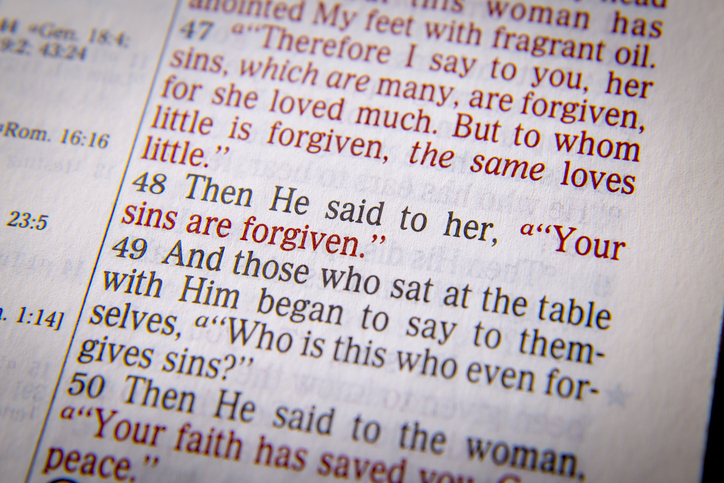
The truth? God already knows. And He’s not afraid of the mess. The same God who met a woman at a well in the heat of the day, who let a broken prostitute crash a dinner party and cry on His feet, who stood in front of a weeping Martha and didn’t correct the grief she showed at the death of her brother, but instead He shared in it with her. It’s that same God hears the prayers you’re afraid to say.
He hears them when they’re half-whispers and unfinished thoughts. He hears them when they come with clenched fists or slumped shoulders. And He never once backs away.
So, here’s permission, in case no one’s given it to you before: say the wrong thing. Stumble through it. Let the prayer trail off without a neat closing. God doesn’t love your prayers because they’re polished. He loves them because they come from you.
And just maybe, the prayer you’re afraid to say is the one that opens the door to everything you’ve been needing from Him, the comfort, clarity, or just the quiet assurance that you’re still held in the arms of God.
THE SILENCE DOESN’T MEAN GOD’S NOT MOVING
There’s something uniquely frustrating about praying with all your heart and hearing… nothing.
No confirmation.
No angel choir.
Not even a comforting breeze that smells like fresh cinnamon rolls and holiness.
Just silence.
You sit there with a Bible in your lap, waiting for some sort of divine vibration to hit your chest like, “Yep, I heard that.” But all you get is your HVAC kicking on and the cat licking his foot in the corner. It’s unnerving.
And if you’ve ever been in that place, you know how quickly silence can turn into suspicion. You start wondering if you did something wrong. Did I pray wrong? Am I in sin? Am I annoying Him? Is God ghosting me?
But here’s the thing: silence is not absence. God isn’t distant just because He’s quiet. And He’s not punishing you with silence like a passive-aggressive friend who “just needs space.” He’s doing something deeper, something you may not see until later.
Some of the biggest moves of God in Scripture happened in the quiet. Think about Elijah in 1 Kings 19: he’s hiding in a cave, desperate for God to show up. A windstorm rips through, then an earthquake, then fire, and God is in none of them. Then comes a whisper. A low, still, quiet whisper. And that’s where God was. You know what that tells me? God doesn’t have to be loud to be close.
Even Jesus had silent nights. In the Garden of Gethsemane, He begged the Father to take the cup from Him. He sweated blood. He cried out. And He still went to the cross. That silence didn’t mean God didn’t care. It meant there was a greater purpose in motion.
I have Psalm 46:10 tattooed on my arm. It says, “Be still, and know that I am God.” It doesn’t say, “Be still, and I’ll explain everything in detailed bullet points with illustrations.” Which would be SO much easier. But this verse invites and reminds me to trust when answers are scarce. Stillness with God isn’t always satisfying in the moment, but it’s steadying. It’s how our roots grow deep.
And here’s the honest truth about our ugly prayers: sometimes you won’t hear anything until you look backward. That prayer you thought was ignored? You’ll realize He answered it by changing you, not your circumstance. That silence that felt cold? It turns out He was holding you the whole time.
You’re not crazy for wondering where He is. But don’t mistake the hush for abandonment. He’s still working. He’s still listening. He’s still God, even when it’s quiet.
WHY IT’S WORTH TALKING TO GOD ANYWAY
After everything we’ve unpacked, awkward attempts at prayer, those spiritually suspect thoughts we try to keep on mute, the haunting quiet that follows even our most desperate cries, it’s fair to ask: is this even worth it? Why keep praying when it feels like we’re either doing it wrong, feeling nothing, or risking a theological panic attack every time we get a little too honest?
Because prayer, at its core, isn’t about what we get out of it. It’s about being in the presence of God.
We don’t pray because we’ve figured out how to say holy things in the right tone. We pray because we’ve figured out that life is too much to carry alone, and we need Jesus, who promised not just to listen but to stay. There’s no scoreboard. No spiritual vocabulary quiz. No divine eye-roll if your sentences wander or your voice cracks, or you start thinking about all you have to do tomorrow. Prayer is how you stay connected, even when you’re not confident. It’s the thing that keeps your soul tethered when everything else is unspooling.
And here’s the part that still surprises me: the prayers that felt the least spiritual, the ones that barely formed complete sentences, the ones offered through gritted teeth or half-asleep sighs, are the ones that changed me the most. Not because I finally said the magic words, but because I stopped pretending. I stopped performing. I just came as I was. And God, being God, met me anyway.
There will still be days when you stare at the ceiling and wonder if your words are just echoing in the dark. Days when the silence makes your chest ache. But prayer isn’t a transaction; it’s a relationship. And relationships—real ones—aren’t always neat. They’re full of pauses, misunderstandings, late-night talks, and unfinished thoughts. They’re also where trust is built. Slowly. Gently. Deeply.
So even if your next prayer starts with, “God, I have to tell you… I don’t even know what I’m doing,” that’s a good enough place to begin. Then, trust that God will lead you where you need to go. For me, I want to be where He is. That’s my happy place. If you’re wavering or still nervous, don’t be. Try it. I bet your happy place is just a few prayers away.
☕ My prayer for you: live with a little faith, a little courage, and a whole lot of stubborn joy. – Tonya
What’s one honest prayer you’ve been too afraid to pray out loud? Want to take a brave first step and write it down here? I’d love to pray with you.
© 2025 All posts written (after talking to God and my dog Riley) by Tonya E. Lee