WHY YOU’RE NOT A BURDEN: A CHRISTIAN TAKE ON NEEDING PEOPLE
I used to hate asking for help of any kind, whatsoever. Not in the “Oh no, I’ve got this” way people say when they’ve got, at best, half of it. No, I mean the white-knuckled, pride-drenched, stubborn kind of independence that thinks asking for help is a moral failure. If I couldn’t do it myself, I wasn’t trying hard enough. Or worse, I was being a burden. No one really cares if I need something anyway, right? They all have their own stuff. I just need to take care of my own business and power through it. Because that’s what heroes do, right?
But here’s what I’ve learned the hard way, through more than one life detour and more than a few tear-stained prayers: being human means being needy. You heard me. Needy. We all need. And God is not threatened by our need. In fact, He designed us that way on purpose.
This isn’t a glitch in the system. It’s a feature.
THE LIE OF SELF-SUFFICIENCY
Somewhere between group science projects in middle school and trying to file our taxes for the first time, a message got wired into us: Needing people means you’re not enough. Being needy is “co-dependency,” and any kind of dependency is unhealthy.
And if you believe that lie long enough, it shapes how you move through the world. You hesitate to reach out. You apologize for your feelings. You say, “Sorry to bother you,” when what you mean is “I’m drowning a little and I need a hand.” And if someone does show up? You spend the next two hours trying to prove you weren’t that needy. We humans, as much as I love us, are very silly creatures.
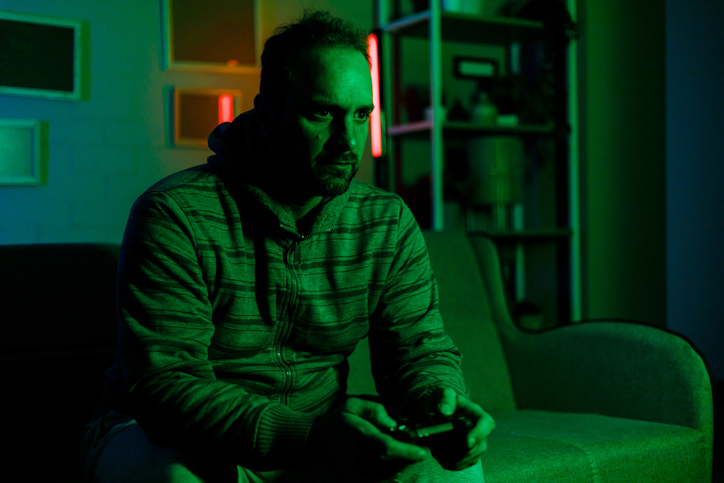
But from the very beginning, God said, “It is not good for man to be alone” (Genesis 2:18). That wasn’t just about marriage. It was a declaration over all of humanity. God made us to need Him, absolutely, but also to need each other. Sitting in a room, in front of a computer or a console for hours upon hours, is not what we were made for. I write this while saying it to myself at the same time. I am right here with you. I get it.
WHEN INDEPENDENCE GETS IN THE WAY
Western culture loves a self-made success story. We’re taught that strength looks like rugged independence, that adulthood means “handling it” no matter what. But Scripture paints a different picture.
Ecclesiastes 4:9-10 tells us, “Two are better than one… If either of them falls down, one can help the other up.” There’s no prize for collapsing alone. There’s no spiritual trophy for gutting it out in isolation. There’s no special reward in heaven for “best solo.”
Even Jesus—Jesus Himself!—didn’t live independently. He walked with friends. He wept with two sisters who were grieving. He asked His closest companions to stay awake and pray with Him in His darkest hour (Matthew 26:38). If Jesus didn’t consider Himself above the need for community, why do we?
THE WEIGHT OF INVISIBILITY
Let me say something hard, but from my own feelings here: sometimes the fear isn’t just about seeming to be needy. It’s about the fear of being invisible. You wonder if anyone would show up even if you did reach out. You ask yourself, “If I disappeared for a week, would anyone notice?” “Am I going to be that old woman who dies in her recliner, only to be found three weeks later half-eaten by her cats?”
The honest part of that question is brutal. And real. And it’s exactly the kind of question the enemy wants you to keep buried. Because isolation breeds despair. You stay in front of the console or computer, and you will not lead a happy, contented, and fruitful life. I know this because I’ve lived it. I’ve shut myself off for hours, days, even a week to either work, play, or escape (sometimes all of the above), and it has never made me truly contented.
But the gospel refuses to let us stay in this place. In Romans 12:5, Paul reminds us that “in Christ, we, though many, form one body, and each member belongs to all the others.” Belongs. That’s not passive. That’s an intimate, intentional, mutual connection. We don’t just float next to one another in the same Christian pool. We belong to each other. Does that mean that every Christian in your church is going to be your closest friend? No. But it does mean that those who walk in the body of Christ are there to help you, teach you, mentor you as you find the group that best suits and supports who God made you to be.
HOW TO STOP FEELING LIKE A BURDEN
I know this mindset doesn’t break overnight. So here are five soul-level ways to start stepping out of the lie and into the truth:
- Tell the Truth Out Loud – Start here: say the sentence you’re afraid to say. “I’m lonely.” “I’m overwhelmed.” “I don’t feel seen.” Not in a public confessional, but to a safe, godly friend. James 5:16 calls us to confess—not just sin but need—so that healing can begin.
- Ask for Something Small on Purpose – Let someone bring you dinner. Ask for help moving a piece of furniture. Tell a friend, “Can you check on me this week?” Small asks build big trust. They retrain your heart to receive love without earning it.
- Stop Apologizing for Your Humanity – You don’t need to preface your texts with “Sorry I’m being weird.” You’re not weird. You’re human. Let go of the apology. You’re not interrupting someone’s life—you’re inviting them into yours.
- Look for Interdependence, Not Dependence – Needing people isn’t codependence. It’s community. Galatians 6:2 says, “Carry each other’s burdens…” but verse 5 reminds us, “Each one should carry their own load.” It’s both. You give and receive. You carry and are carried.
- Trust That You’re Worth Showing Up For – This one’s the hardest. But hear me: you are not a burden. Your pain isn’t too much. Your need doesn’t make you weak. You matter to God and to the people He’s placed in your life—even if they haven’t said it lately.
THE BODY OF CHRIST ISN’T A METAPHOR
We talk about the “body of Christ” like it’s a theological theory. But it’s not a metaphor. It’s a messy, beautiful, real-life truth. God didn’t call us to be a crowd. He called us to be a body that is connected, invested, and committed to each other.
You were never meant to do this alone. You weren’t wired to suffer silently. You weren’t created to “figure it out” by yourself while pretending everything is fine. That’s not adulting. That’s isolation with a side of self-deception. When we let people in, really let them in, we give them the privilege of fulfilling their calling right alongside us. We give God the space to move through ordinary conversations, shared groceries, late-night texts, and quiet prayers in parking lots. And we discover that the weight we were never meant to carry alone becomes bearable, even beautiful, when there are enough shoulders underneath it.
So if today you’re feeling needy, emotionally, spiritually, mentally, I want you to know that’s not a sign of immaturity. It’s a sign of being alive. Reach out. Ask for help. Let someone see the whole picture. You won’t always get it right, and sometimes the people you ask won’t either. But it’s worth the risk. Because God didn’t make you to be invincible. He made you to be known.
☕ May you have a little faith, a little courage, and a whole lot of stubborn joy. – Tonya
What’s the hardest part of asking for help or connection right now? I’d love to hear.
© 2025 All posts written (while reminding herself she can’t move a refrigerator alone) by Tonya E. Lee.